
Espresso-inspired flash extraction completed within ten minutes, built for cold brew concentrate and specialty coffee beverage production.
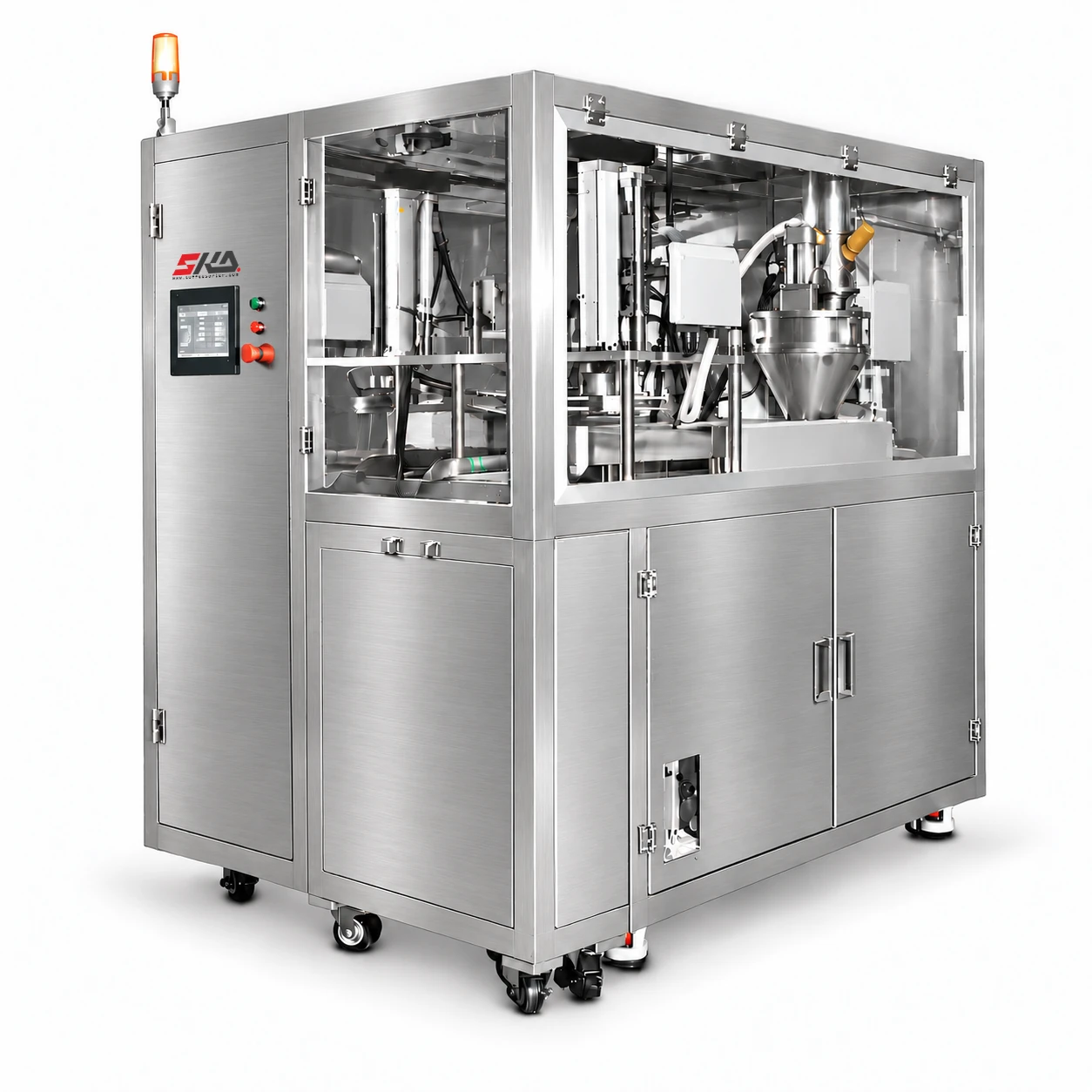
SKA flash extraction applies the extraction profile of an espresso machine at industrial scale. Hot water passes through a tamped bed of coffee and the extraction stage is completed within ten minutes. The liquid is transferred by centrifugal pump to a downstream filtration stage, producing a concentrated coffee base for cold brew and other beverage formats.
| Extraction method | Filter-based extraction |
| Extraction profile | Espresso-machine extraction profile |
| Extraction time | Within 10 minutes (extraction stage) |
| Coffee loading and tamping | Brew-basket loading, tamped by the brew head |
| Grounds discharge | Electric-cylinder lifting with pneumatic pusher |
| Liquid transfer | Centrifugal pump, starts at 5 L in the collection tank |
The system applies the extraction profile of an espresso machine at industrial scale, with automation carrying the cycle through loading, extraction and discharge.
The extraction stage is controlled within ten minutes, which limits the flavours that develop during prolonged extraction. The figure covers the extraction stage, not the complete production cycle.
Ground coffee is loaded into the brew basket and tamped by the brew head before hot-water extraction begins, which keeps the coffee bed even from batch to batch. Loading is manual on the 2 kg semi-automatic configuration and automatic on the fully automatic models.
An electric cylinder lifts the spent grounds while a pneumatic pusher clears them from the brew head, so operators do not handle hot grounds by hand.
When liquid in the collection tank reaches 5 litres, the centrifugal pump starts and feeds the downstream filtration stage without operator input.
The concentrated extract is the starting point for cold brew, ready-to-drink coffee and other beverage formats, with downstream filtration included in the process.
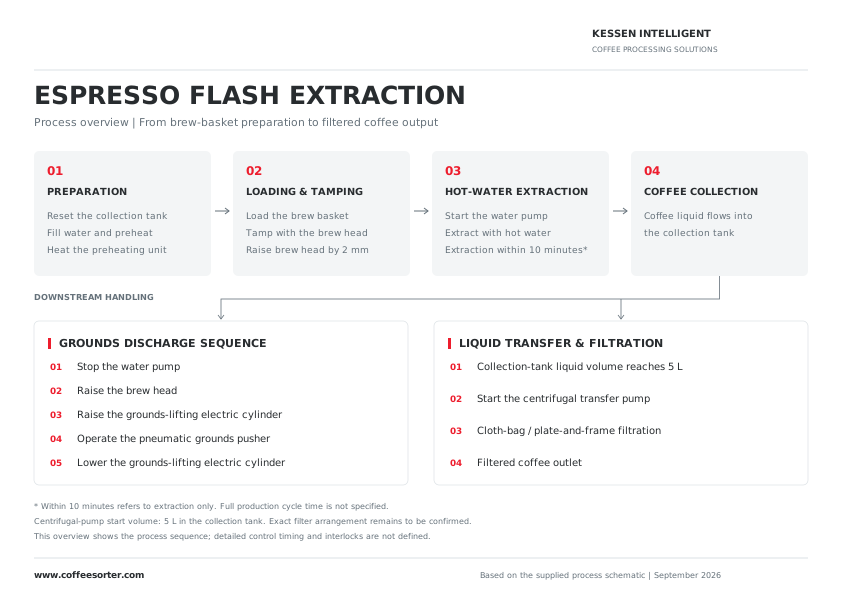
Six steps from tank reset to grounds discharge. Every step below runs automatically once the cycle starts.
The collection tank resets and the water supply is preheated ready for the cycle.
Ground coffee is loaded into the brew basket and tamped by the brew head.
The brew head rises 2 mm and the water pump starts. Hot water passes through the tamped coffee bed.
Extracted coffee liquid flows from the brew head into the collection tank.
At 5 litres the centrifugal pump starts, sending liquid to the downstream filtration stage and then to the product outlet.
The water pump stops, the brew head rises, an electric cylinder lifts the grounds and a pneumatic pusher clears them.
The concentrated extract this system produces is a base ingredient rather than a finished drink. It suits operations that need a repeatable coffee concentrate at volume.
Because extraction equipment is built around your product, we would rather talk through the process than publish numbers that may not apply to your line.
Tell us the flavour profile you are aiming for, the format you plan to sell, and your target volume. No standard packages, no assumptions.
Discuss your projectThe system is built in three configurations. The figures below are the manufacturer values for each.
| Configuration | 2 kg Semi-Automatic |
2 kg Fully Automatic |
5 kg Fully Automatic |
|---|---|---|---|
| Overall dimensions (mm) | 1100 × 1100 × 1950 | 1400 × 1100 × 2000 | 1600 × 1200 × 2200 |
| Machine weight (kg) | 400 | 600 | 850 |
| Peak power (kW) | 15 | 16 | 20 |
| Running power (kW) | 8 | 8 | 10 |
| Ground-coffee loading | Manual | Automatic | Automatic |
| Touchscreen (inch) | 7 | 7 | 10 |
| Water system | Water softening | Purified water | Purified water |
| Stated capacity (t/24h) | 1 | 1 | 2 |
| Parameter | Value |
|---|---|
| Brand | SKA |
| Equipment category | Industrial coffee extraction equipment |
| Extraction method | Filter-based extraction |
| Extraction profile | Espresso-machine extraction profile |
| Extraction time | Within 10 minutes (extraction stage) |
| Automation | Automated production |
| Design focus | Specialty coffee aroma, mouthfeel and complexity |
| Coffee loading and tamping | Brew-basket loading; tamping by the brew head |
| Brew-head positioning | 2 mm upward movement after tamping |
| Grounds-discharge mechanism | Electric-cylinder lifting and lowering with pneumatic pushing |
| Liquid transfer | Centrifugal pump downstream of the collection tank |
| Centrifugal-pump start volume | 5 L of liquid in the collection tank |
| Downstream filtration | Cloth-bag / plate-and-frame filtration (configuration dependent) |
What is still open. Extraction temperature and pressure, coffee-to-water ratio, product concentration, extraction yield, filter rating and certification are not fixed figures. They depend on the coffee you run and the product you are making, so we confirm them against your project instead of quoting a generic number. Ask us and we will tell you what is fixed and what is not.
Flash extraction takes the extraction profile of an espresso machine and applies it at industrial scale. Instead of steeping ground coffee for hours and waiting for gravity to do the work, the machine tamps a measured bed of coffee in a brew basket and drives hot water through it under pump pressure. The extraction stage is completed within ten minutes, which limits the bitter, woody notes that develop when coffee stays in contact with water for a long time. What leaves the machine is a concentrated extract, not a finished beverage.
The collection tank resets and the water circuit preheats. Nothing is loaded until the cycle is ready.
Ground coffee goes into the brew basket. The brew head tamps the bed before extraction starts, which is what keeps the water path even across the basket and holds the extraction repeatable from batch to batch.
The brew head lifts by 2 mm and the water pump starts. Hot water passes through the tamped bed and carries the soluble material out of the coffee.
Extracted liquid flows into the collection tank, and the machine tracks the volume.
When the tank reaches 5 litres, the centrifugal pump starts automatically and moves the extract downstream to the filtration stage. Depending on configuration, that stage is a cloth-bag or plate-and-frame arrangement. The filtered extract leaves through the product outlet.
The sequence is mechanical: the water pump stops, the brew head rises, an electric cylinder lifts the spent grounds and a pneumatic pusher clears them from the head. Operators do not handle hot grounds by hand, and the next batch can be loaded without waiting for the machine to cool.
Cold brew concentrate is usually made by steeping coarse grounds in cold water for twelve to twenty-four hours. That method works, and it also occupies a tank for a full day, needs floor space, and leaves the result dependent on grind consistency and time.
Flash extraction approaches the same product from the other direction. A short, controlled hot-water extraction produces a concentrated base quickly, and the liquid is handled downstream from there. For a producer bottling cold brew or building ready-to-drink lines, that changes daily output per square metre and takes the overnight soak out of the schedule.
The flavour profile is not identical to a twelve-hour steep, and we will not claim it is. Whether a flash-extracted concentrate fits your product is a question about the cup you want to sell, which is why we would rather test a sample than assert a result.
Coffee roasters developing beverage products, beverage brands planning a coffee line, and commercial producers expanding capacity. The extract suits cold brew concentrate, ready-to-drink coffee, and other formats where a consistent coffee base matters more than a single-origin brew method.
Extraction method, extraction profile, the ten-minute extraction stage, brew-basket tamping, the 2 mm head movement, the electric-cylinder and pneumatic discharge, the centrifugal transfer at 5 litres and the downstream filtration stage are all fixed parts of the design, and you will find them in the table above.
Three configurations are available, and the figures for each are listed on this page: dimensions, machine weight, peak and running power, ground-coffee loading, touchscreen size, water system and stated capacity. What we do not publish as a fixed number is extraction temperature and pressure, coffee-to-water ratio, product concentration, extraction yield and filter rating. Those depend on the coffee and the finished product, and we would rather confirm them against your project than quote a number that turns out not to apply. Tell us your target output and the product format, and we will specify the machine against your numbers.
It refers to applying an espresso-machine extraction profile through an automated, filter-based process at industrial scale, with the extraction stage held within ten minutes.
The extraction stage is controlled within ten minutes. The complete production cycle, including loading, transfer, discharge and cleaning, is a separate figure and is confirmed against your configuration.
The system produces a concentrated coffee extract that serves as the base for cold brew and other beverage formats. Because cold brew recipes differ widely, we discuss the target concentration and flavour with you rather than quoting a single standard result.
No. The machine uses hot water for extraction and the process is documented, but we do not publish temperature or pressure figures we cannot verify on your product.
Your target output per batch or per day, the product format you intend to sell, available installation space, local voltage and frequency, and destination country. Send those five items and we can specify the machine.
Twelve months on the complete machine. The start date is confirmed in writing with your order.
Installation and calibration guidance over video call, with operator training for your team.
Wear parts ship with the machine, with a price list for later orders.
One named contact on WhatsApp, with a response inside 24 hours.
Tell SKA your target output in litres per batch or per day, intended product format, available installation space, local voltage and frequency, and destination country. We will come back with a specification and a quotation.