CCD vs NIR Coffee Color Sorter: How to Choose
CCD vs NIR Coffee Color Sorter: How to Choose
When you are comparing a CCD vs NIR color sorter for coffee, the question is not which technology is "better" — it is which one sees the defects you actually have. The two optical systems look at coffee beans in fundamentally different ways, and most export-grade coffee lines end up needing one of them as the primary sorter, with the other as a complement. This guide breaks down what each technology actually detects, where each one falls short, and how to match the choice to your defect profile, bean type, and throughput.
What CCD and NIR Actually See
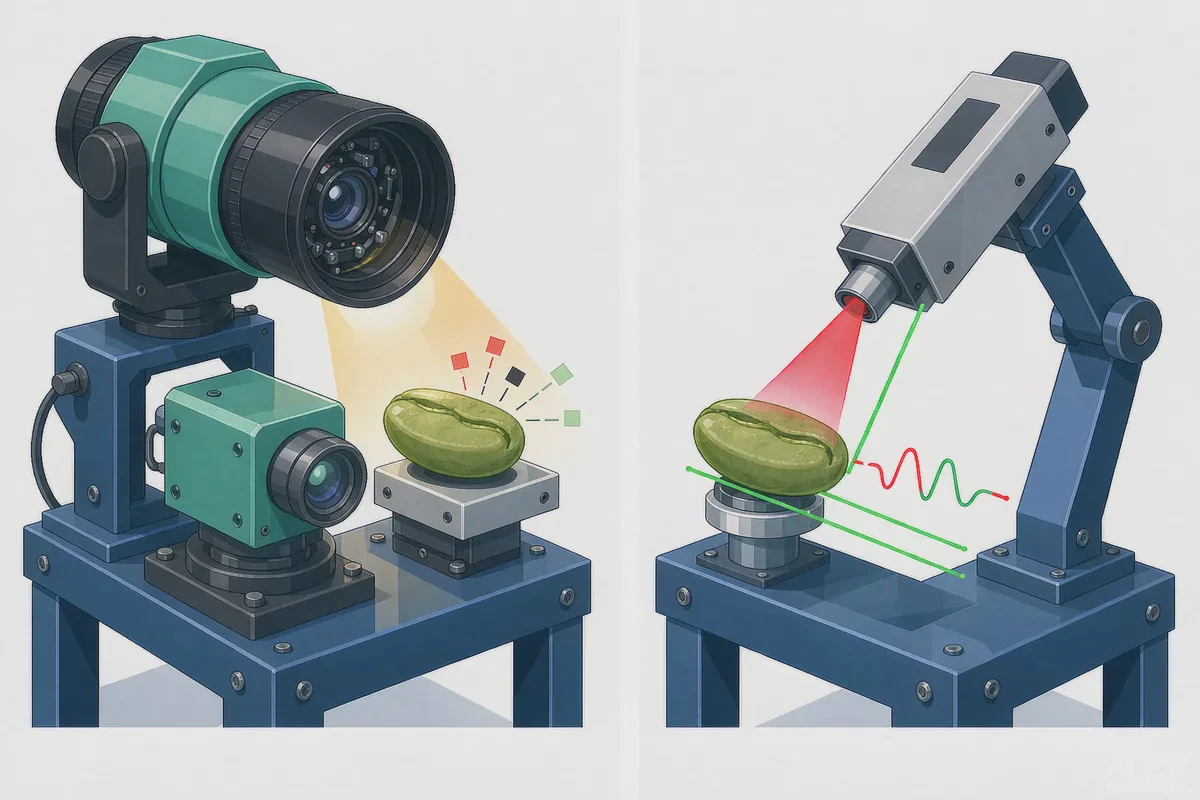
The core difference is the signal. A CCD (Charge-Coupled Device) sensor captures full-color visible light reflected off the bean surface. It is, in effect, a high-resolution color camera: it sees the red of an over-fermented bean, the gray-green of an immature one, the black of a charred or moldy bean. If the defect shows up as a color difference a human eye could catch under good lighting, CCD will catch it faster and more consistently.
NIR (Near-Infrared) sensing works at a wavelength just beyond visible light. Instead of surface color, it reads how the bean absorbs and reflects infrared — which correlates with moisture content, density, and chemical composition. NIR can distinguish a stone from a coffee bean of the same color, or separate a shell fragment from a green bean that looks identical on the surface. What it cannot do well is tell a sour bean from a good bean if both are the same shade of green.
In production-line terms: CCD sorts by what the bean looks like; NIR sorts by what the bean is made of. For most coffee processors, the surface-color defects (black, sour, moldy, insect-damaged) are the majority of what buyers penalize — which is why CCD has been the dominant primary sorting technology for coffee for two decades.
Defect Coverage: What Each Technology Catches
CCD — Surface Color Defects
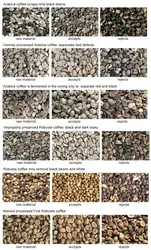
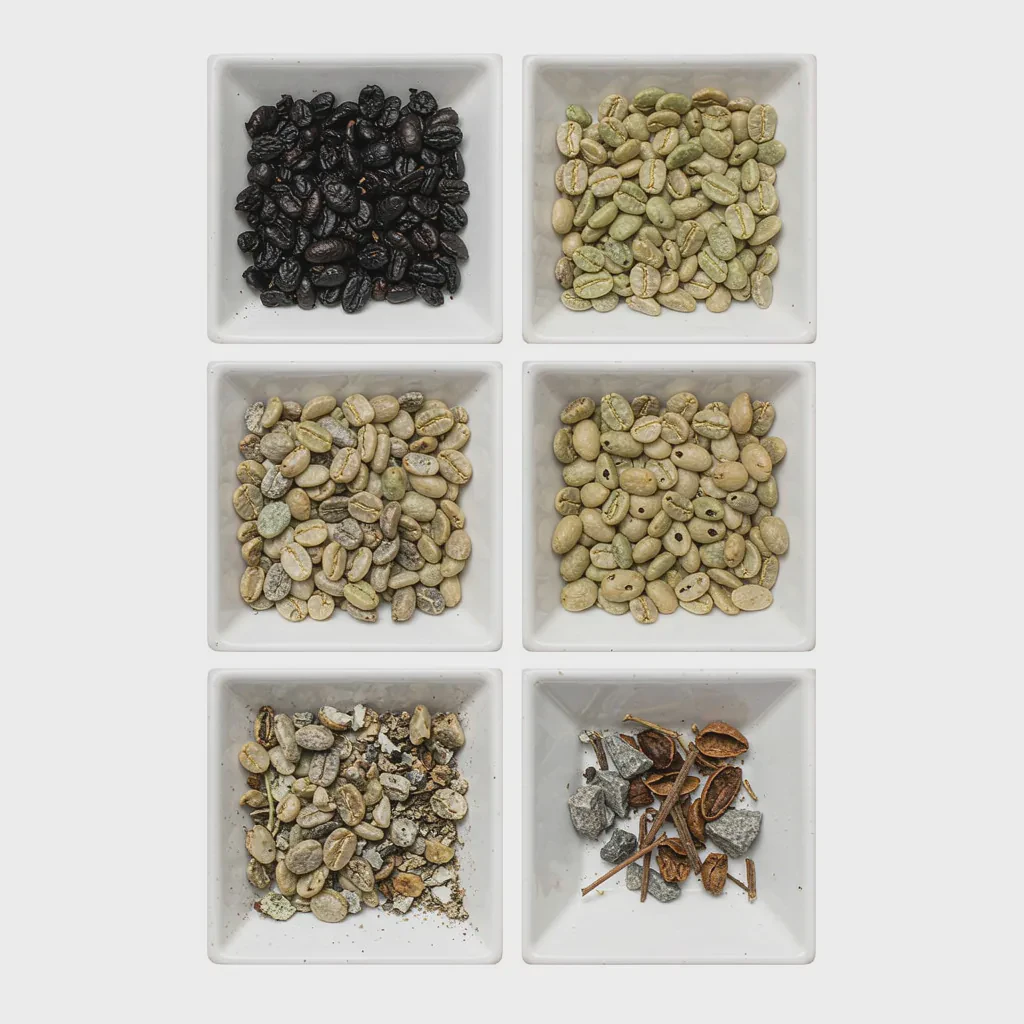
A full-color CCD sorter with AI-trained recognition reliably removes:
- Black beans (over-fermented or charred) — the highest-penalty defect in most export specs
- Sour beans (under-fermented or fungal-stained)
- Moldy beans with visible surface discoloration
- Insect-damaged beans where the hole or staining is visible
- Immature or unripe beans (pale green or yellowish)
- Broken and chipped beans with exposed endosperm color differences
CCD struggles when the defect has no surface signal — for example, a stone the same color as the surrounding beans, or a shell fragment camouflaged against green coffee. This is where NIR earns its place on the line.
NIR — Composition and Foreign Matter
NIR adds a second layer of discrimination that CCD cannot match:
- Stones and rocks of similar color to the beans
- Sticks, twigs, and shell fragments that blend in visually
- Glass and hard plastic foreign matter
- Beans with internal damage (insect tunnels hidden under intact surface)
- Moisture outliers — beans that are visibly fine but over-dry or under-dry, which affects roast uniformity
What NIR is poor at: separating coffee beans from other coffee beans based on color. A lot full of sour green beans and good green beans at the same shade will pass through an NIR-only sorter almost unchanged.
When You Need CCD, NIR, or Both
Green Coffee Processing
For green coffee headed to export, CCD with AI vision is the primary sorter. It catches the full spectrum of color defects that buyers and SCA cupping protocols penalize. If your line handles robusta or mixed-grade arabica, the defect load is mostly color-based — black, sour, insect-damaged — and CCD alone gets you to export grade on a well-prepared lot.
Add NIR when your upstream cleaning is inconsistent: hand-picked or mechanically harvested lots with variable foreign-matter loads benefit from an NIR stage downstream to catch stones and sticks that survived destoning and dehulling.
Roasted Coffee Processing
Roasted coffee flips the challenge. The beans are dark, the color range is narrow, and the high-value defects are quakers (under-roasted, pale beans) and scorched beans. CCD with a high-resolution camera and tight color tolerance handles both reliably. NIR is less useful on roasted coffee because the moisture signal is largely gone after roasting — most roasted-coffee lines run CCD-only.
Foreign Matter Control
If your buyer contracts include a zero-tolerance clause for stones, glass, or metal, you need either an NIR stage or a dedicated foreign-matter sorter in addition to your color sorter. CCD alone cannot guarantee stone removal on lots where stones match the bean color. A metal detector downstream is non-negotiable for metal contamination.
How SKA Sorters Approach This: Full-Color CCD + AI Vision
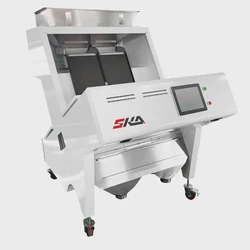
Based on how SKA Machinery configures its coffee line, every SKA color sorter runs full-color CCD detection paired with AI-powered recognition — not NIR. The reasoning is straightforward: for the defect spectrum that coffee exporters actually get penalized for, the color signal carries most of the information, and AI-trained models on top of CCD adapt to new bean varieties and defect patterns faster than re-tuning an NIR threshold.
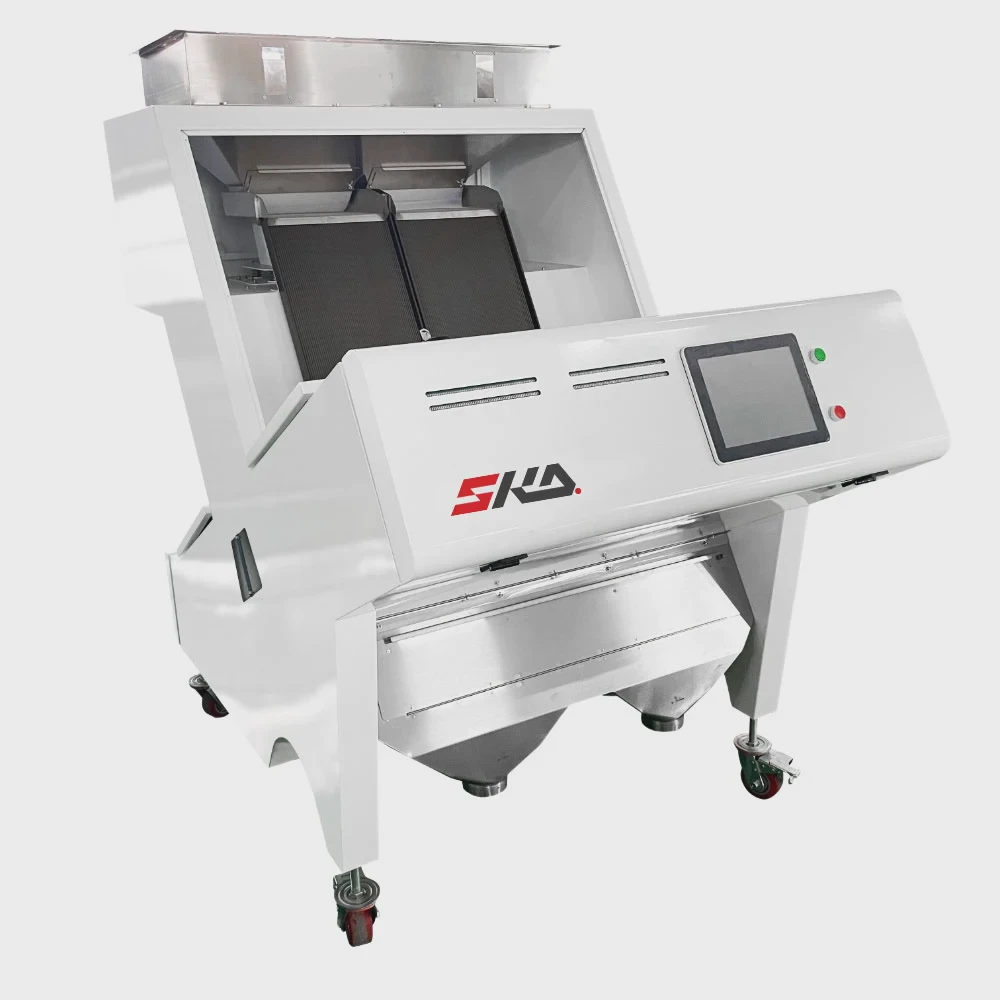
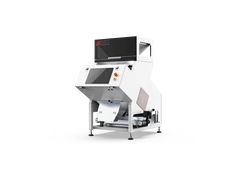
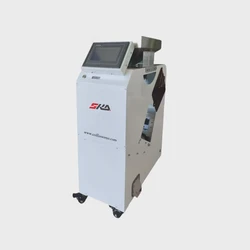
The SKA range covers four throughput tiers, all on the same CCD + AI platform:
- SKA-16 — 30–60 kg/h, 0.2 kW, the compact entry point for roasteries and small mills
- SKA-32 — 0.3 T/h, 32 air holes, 105 kg, laboratory-grade precision in a compact unit
- SKA-1A64 — 0.3–0.5 T/h, 64 air holes, 160 kg, for growing processors and mid-size mills
- SKA-2A128 — 1 T/h, 128 air holes, 320 kg, the industrial choice for export lines
All four carry the same accuracy rating: 99.9% sorting accuracy, measured on standard material. Read that condition carefully — "standard material" means a clean, well-graded benchmark sample. On a difficult lot with high defect density or mixed varieties, field accuracy typically runs between 97% and 99%. Any supplier who quotes a flat 99.9% without specifying the test material is being evasive; ask for the test methodology.
If your operation genuinely needs NIR-level foreign-matter separation on top of color sorting, the honest answer is that SKA does not build an NIR machine. You would pair an SKA CCD sorter with a separate NIR or foreign-matter stage downstream, or source a combined CCD+NIR unit from another manufacturer for that specific line.
Quick Comparison: CCD vs NIR at a Glance
| Dimension | CCD + AI Vision | NIR |
|---|---|---|
| Signal detected | Surface color (visible light) | Composition, moisture, density (infrared) |
| Best at | Black, sour, moldy, insect-damaged, immature beans | Stones, sticks, glass, shell fragments, moisture outliers |
| Weak at | Same-color foreign matter, internal defects | Color-based defect separation |
| Typical role | Primary sorter on coffee lines | Complement / foreign-matter stage |
| Bean type fit | Green and roasted coffee | Mostly green coffee; limited value on roasted |
| SKA availability | Yes — all SKA-16/32/1A64/2A128 models | No — SKA does not build an NIR machine |
How to Decide for Your Line
Work through these five questions before you talk to any supplier — not after.
- List your top defect categories. If black, sour, and insect-damaged beans dominate, CCD + AI is your primary technology. If stones and foreign matter are the recurring rejection cause, you need an NIR or foreign-matter stage.
- Identify your bean type and grade. Green robusta, green arabica, and roasted coffee each have different defect profiles — confirm the sorter has documented test runs on your specific bean, not just one.
- Check your upstream cleaning. A good destoner and dehuller upstream reduce the NIR burden dramatically. If your upstream is inconsistent, budget for an NIR complement.
- Lock down your throughput tier. Match the sorter to your peak daily volume at 70–80% of rated capacity. See our buying guide for the full capacity-matching framework.
- Ask the supplier the accuracy question the right way. "What material was the 99.9% measured on, and what is your field accuracy on a 5% defect-density lot?" A supplier that answers both has tested it; one that dodges has not.
FAQ
Is NIR better than CCD for coffee sorting?
No — they detect different things. CCD catches surface color defects (the majority of what buyers penalize); NIR catches composition and foreign matter. Most coffee lines use CCD as the primary sorter and add NIR only when foreign-matter control is a contract requirement.
Can one machine do both CCD and NIR?
Some manufacturers build combined CCD+NIR units, typically at a higher price point. SKA Machinery builds CCD + AI sorters only; if you need NIR-level foreign-matter separation, you pair an SKA CCD sorter with a separate downstream stage.
Do I need NIR for roasted coffee?
Usually no. Roasted coffee's main defects (quakers, scorched beans) are surface-color issues CCD handles well, and the moisture signal NIR relies on is largely gone after roasting. Most roasted-coffee lines run CCD-only.
How does AI change the CCD vs NIR choice?
AI-trained CCD vision narrows NIR's advantage. By learning bean profiles and defect patterns, AI-CCD catches edge cases that used to need NIR — though it still cannot see inside a bean. AI is a complement to the sensor, not a replacement for the right sensor.
Next Steps
The CCD vs NIR choice comes down to your defect list, not a spec sheet. Send SKA your daily throughput, the bean varieties you process, and the defect categories your buyers penalize — we will match you to the right SKA CCD + AI configuration with documented test data, not a brochure. Request a quote or message us on WhatsApp for a fast response. For a deeper look at how the optical chain works end to end, read our guide on how a coffee color sorter works.