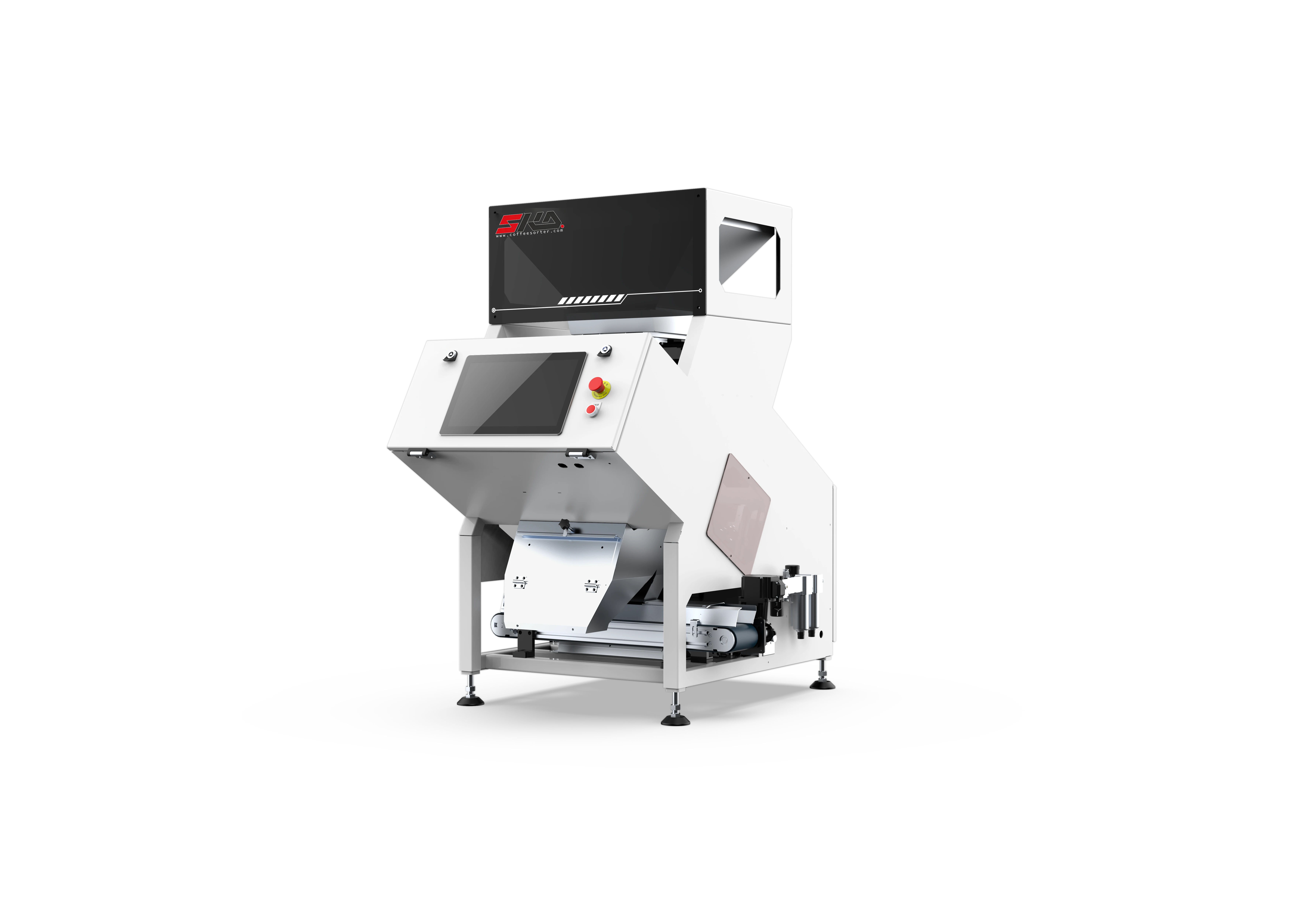
Coffee Sorter Capacity Guide: What TPH Do You Need
Coffee Sorter Capacity Guide: What TPH Do You Need
Coffee sorter capacity is the first number most buyers grab from a spec sheet — and the one most often misread. A machine rated at 1 t/h on the brochure can quietly deliver half that on wet, mixed-variety parchment, or choke at full rate if the ejectors can't keep up with defect density. This guide shows what rated throughput actually measures, how to calculate the TPH your line really needs, and which sorter size fits your operation — from a 20 kg roastery sample line to a 2.5 t/h export plant.
What "Rated Capacity" Actually Means
Rated capacity is the maximum feed rate at which a sorter maintains its specified accuracy on standard test material — not the speed at which it runs on whatever you throw at it.
Manufacturers measure it the same way they measure accuracy: a representative, clean-flowing lot, moderate defect ratio, normal moisture, machine dialed in. Change one of those conditions and the number moves. That's why two lines running the "same" 1 t/h machine can differ by a third in real output. Treat rated capacity as an upper anchor, never a guarantee.
Rated TPH vs Effective TPH: What Moves the Number
In field operation, five variables decide how close you get to the rated figure:
- Defect ratio. Above roughly 10–15% reject load, solenoid valves and air recovery become the limit, not the camera. High-defect robusta lots run slower than clean arabica.
- Bean size and variety mix. Mixed calibers flow unevenly down the chute; the feeder has to run a lighter layer to keep single-particle detection reliable.
- Moisture and surface condition. Damp or mucilage-sticky beans clump, and a clump sorts as one object — so throughput drops or accuracy does, pick one.
- Target purity. A spec of "no visible black beans per 300 g" needs a slower feed than general commercial grade, full stop.
- Upstream feeding. Most "the machine is slow" calls trace back to an erratic elevator or hopper, not the sorter. A steady, even bed is worth more than any extra TPH on the nameplate.
The practical planning rule we use with customers: size the sorter so your normal running rate sits at 70–80% of rated capacity. The headroom absorbs defect spikes, moisture swings and future volume — and keeps the machine off its ceiling where accuracy starts to erode.
How to Calculate the Capacity You Actually Need
Work the number backward from your shipment plan, not forward from a machine catalog:
- Annual throughput. Total tons of cleaned coffee you expect to sort per year.
- Operating days. Real days your line runs — harvest-seasonal operations pack 8 months of volume into fewer running hours than a year-round importer.
- Shift hours per day. Count only sorted-line hours, not drying or rest.
- Average rate. Annual tons ÷ (days × hours) = your baseline TPH.
- Peak factor. Multiply by 1.25–1.5 — export orders cluster before shipping windows.
- Rated size. Divide the peak rate by 0.75 (the 70–80% rule) to get the machine's rated capacity.
Worked example: a washing station handling 300 t/year over 200 days, one 10-hour shift → 0.15 t/h average × 1.5 peak = 0.23 t/h running rate ÷ 0.75 → a 0.3 t/h class machine (SKA-32 / SKA-1A64 territory) is the right tier, not the 1 t/h unit a supplier may upsell. The same math at 1,200 t/year lands you in the 1–2 t/h band.
The SKA Capacity Ladder
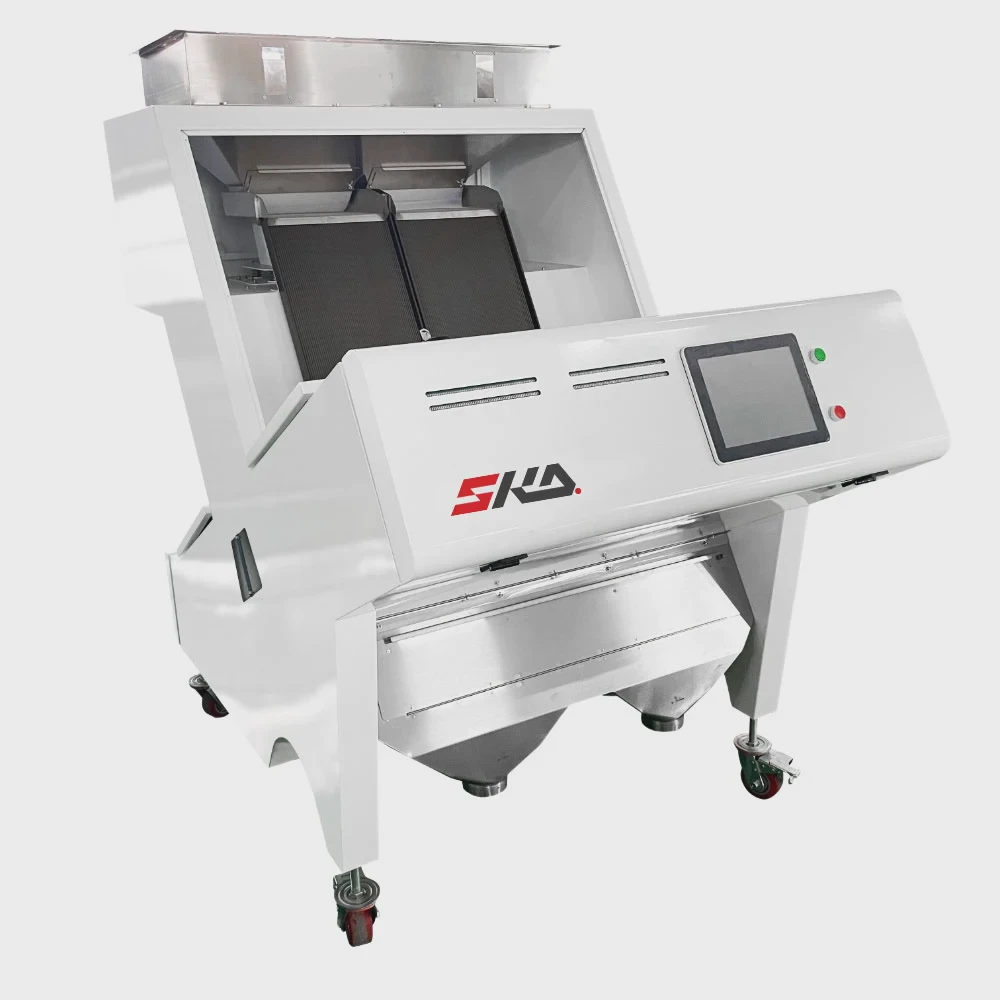
| Model | Rated Capacity | Best Fit |
|---|---|---|
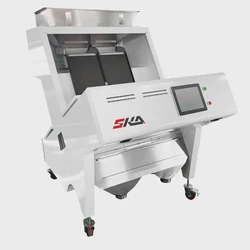
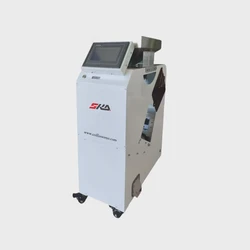
| SKA-16 | 30–60 kg/h | Roastery QC, sample lots, micro-lots |
| SKA-32 | 0.3 t/h | Small mills, single-origin stations |
| SKA-1A64 | 0.3–0.5 t/h | Small export lines, cooperative pools |
| SKA-2A128 | 1 t/h | Washing stations, mid-size exporters |
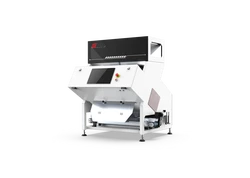
| K64C | 1–2 t/h | AI shape+color sorting, specialty grade |
| K128C | 2–2.5 t/h | High-throughput export plants |
All figures are rated (standard-material) capacity. Your effective TPH is set by the five variables above — which is exactly why we ask for samples before recommending a tier, and why the buying guide puts capacity matching ahead of price talk.
Two Sorters or One Big One?
Above roughly 1 t/h, buyers ask whether to buy one 2 t/h machine or two 1 t/h units. The honest trade:
- Two smaller machines give redundancy — if one needs service, 50% of the line keeps running. They also let you run different defect profiles (washed vs natural) on separate models. Total footprint and floor space go up.
- One large machine costs less per ton of capacity, takes one training cycle and one set of spare parts. A breakdown stops sorting entirely.
Seasonal operations shipping 40-foot containers in tight windows lean toward the two-unit setup; year-round processors with stable material and in-house technicians usually prefer the single large unit. Neither answer is universal — it's a downtime-cost question, and the ROI worksheet is where that math belongs.
What Oversizing and Undersizing Really Cost
Undersized: the sorter becomes the line bottleneck, so operators bypass it — the single most expensive outcome, because unsorted defects ride into the container and come back as price deductions or refused lots. Feeding an undersized machine harder also thickens the chute layer, and double particles sort as one — you lose accuracy and get the throughput you didn't have anyway.
Oversized: you pay a larger deposit and a bigger compressor. High-capacity machines need proportional compressed air — the K-series runs on 0.5–0.8 MPa supply, and sizing the air system for a 2.5 t/h machine you never fill is dead capital. Oversized equipment also idles at low layer density, where detection consistency drops.
FAQ
Is rated capacity measured on green or roasted coffee?
On standard green-bean test material for green coffee sorters. Roasted beans are lighter and more brittle, so effective throughput on roasted lots typically runs lower than the green-bean rating. Tell us which stage the sorter sits at.
Can I start smaller and add capacity later?
Yes — several SKA customers begin at the 0.3–0.5 t/h tier and add a second unit as volumes grow. Two machines on separate batches often beat one upsold large unit on flexibility, provided you have floor space and air supply for the second.
Does higher capacity hurt sorting accuracy?
At rated flow on standard material, no — that combination is the test condition. Below rated flow accuracy generally holds; above it, chute layer thickness and ejector duty degrade results. The 70–80% planning rule exists precisely to keep you inside the reliable band.
What compressed air do capacity tiers need?
All current SKA color sorters operate on 0.5–0.8 MPa clean, dry air. The larger the valve bank, the greater the volume (CFM/L-min) your compressor must sustain at that pressure — quote the compressor alongside the sorter, not after installation.
Next Steps
Capacity is a line-design number, not a model number — so send us three facts: your annual tonnage, your running calendar, and your defect profile (or a sample). We'll map it to the right tier on the ladder with test data from your own material, not a brochure — and if a 0.3 t/h machine is the honest answer, that's the one you'll get. Request a quote or message us on WhatsApp. To understand what limits throughput inside the machine, read how a coffee color sorter works.