Top 10 Color Sorter Manufacturers in 2026
Top 10 Color Sorter Manufacturers in 2026
Search "top 10 color sorter manufacturers" and you get lists ranked by company size, which is close to useless when you are choosing a machine for coffee. A 40 t/h grain line and a 0.3 t/h single-origin mill need different suppliers. This shortlist is sorted by fit for coffee processors instead: what each company actually builds, which sensor technology they lean on, and who they service well. It ends with us, SKA Machinery, and the honest version of where we fit.
The shortlist at a glance
| Manufacturer | Base | Known for | Best for |
|---|---|---|---|
| Bühler (SORTEX) | Switzerland | SORTEX A / H SpectraVision / AI700 / SPARK Pro | Large exporters running full lines |
| Satake | Japan | PIKASEN, NIRAMI multi-NIR with shape recognition | Buyers who want established mechanical engineering |
| TOMRA Food | Norway | Sensor fusion: NIR, laser, camera; LUCAI AI | Defects that color alone cannot see |
| Key Technology (Duravant) | USA | COMPASS belt-fed, VERYX, Optyx, Manta, OCULUS | Gentle handling on delicate products |
| Cimbria (AGCO) | Denmark | SEA series, RGB / NIR / hyperspectral / InGaAs | Seed and grain houses in the AGCO ecosystem |
| Meyer Optoelectronic | China | MASTER 4.0 platform, AI sorting | Rice, nuts and tea at Chinese price points |
| Anhui Zhongke (AMD) | China | High-volume commodity sorters, new industrial base | Commodity rice, tea, plastics, minerals |
| Daewon GSI | South Korea | SPK+ full-color camera grain sorters | Korean and regional grain mills |
| Penagos Hermanos | Colombia | Wet processing: depulping, washing, drying | Latin American producers building a wet mill |
| Pinhalense | Brazil | Pulping, drying, hulling, grading lines | Brazilian mills needing local service |
1. Bühler (SORTEX), Switzerland
The SORTEX range (A, H SpectraVision, AI700, J and SPARK Pro) covers grains, seeds, pulses, coffee and nuts, with throughputs at the very top of the market. If you are building a plant that sorts several commodities on one platform, they are the benchmark everyone else gets measured against. The trade is money: premium capex, and service contracts priced to match.
2. Satake, Japan
Founded in 1896, Satake made its name in rice milling and optical sorting, and its PIKASEN and NIRAMI sorters carry that mechanical depth. NIRAMI adds multi-NIR sensing plus shape recognition, which matters when the defect is internal rather than surface. Coffee is not their home turf, so ask specifically who supports your region.
3. TOMRA Food, Norway
TOMRA built its business on sensor-based sorting and takes the widest sensor view in this list: near-infrared, laser and camera combined, with the LUCAI AI layer on top. Worth a call when your defect list includes things a color camera cannot see, such as foreign material that matches the bean. Expect industrial-scale pricing and a machine that assumes you have technicians.
4. Key Technology (Duravant), USA
Based in Walla Walla, Washington, Key builds COMPASS belt-fed sorters alongside VERYX, Optyx, Manta and OCULUS, detecting color, shape, size and structural properties in a single pass. Their strength is delicate product handling on vegetable, fruit and nut lines. Coffee is a smaller slice of the portfolio, which shows in how much application data they can share.
5. Cimbria (AGCO), Denmark
Cimbria's SEA series runs RGB, hyperspectral, NIR and InGaAs sensors depending on model, with BRAIN software driving the sorting logic. Seed and grain processors already inside the AGCO distribution network get the smoothest experience. Outside that network, support depends on the local dealer.
6. Meyer Optoelectronic, China
Hefei-based Meyer is one of the larger Chinese names, with the MASTER 4.0 platform and AI sorting across rice, nuts, tea and food, plus a Vietnam subsidiary for Southeast Asia. They sit in the middle of the market: sharper pricing than the European brands, a more formal service structure than a small workshop. Strong on rice, less specialized in coffee.
7. Anhui Zhongke (AMD), China
AMD has put serious capital into new manufacturing capacity and competes on volume commodity sorting: rice, tea, plastics and minerals. If your operation is high tonnage and price sensitive, they belong on the quote list. Coffee-specific recipe work is not their center of gravity.
8. Daewon GSI, South Korea
Daewon's SPK+ line uses full-color cameras for discolored and crushed grain, and it is well established in Korean and regional mills. A sensible option if your spare parts and service need to be sourced inside Asia and your volumes are moderate.
9. Penagos Hermanos, Colombia
Penagos is a coffee name rather than a general sorter name: depulping, washing and drying equipment for wet mills, with sorting at farm and mill scale. For a Latin American producer building out a wet mill, sourcing the whole line from one Colombian supplier removes a lot of integration pain. Their sorters are built for that context, not for a 5 t/h export plant.
10. Pinhalense, Brazil
Pinhalense supplies pulping, drying, hulling and grading equipment and ships complete processing lines out of Brazil. The draw is local: Portuguese-language service, regional spare parts, and machines designed around how Brazilian mills actually run. Less relevant if you are outside South America.
How to turn ten names into two quotes
- Throw out anyone who cannot show a test on your own material. A generic demo video proves nothing about your defect profile.
- Filter by service geography. The best machine in the list is a bad buy if the nearest technician is two flights away during harvest.
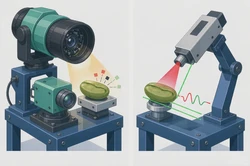
- Match the sensor to the defect. Surface color defects need a good CCD; internal defects and foreign material need NIR or hyperspectral.
- Compare the total installed cost, including the compressor, electrical work and floor, not the machine price alone.
- Ask two of them for a written sample test report with the same material. The difference in how they answer tells you more than the spec sheet.
Our manufacturer evaluation guide goes deeper on what to ask before you sign.
Where SKA Machinery fits, and where it does not
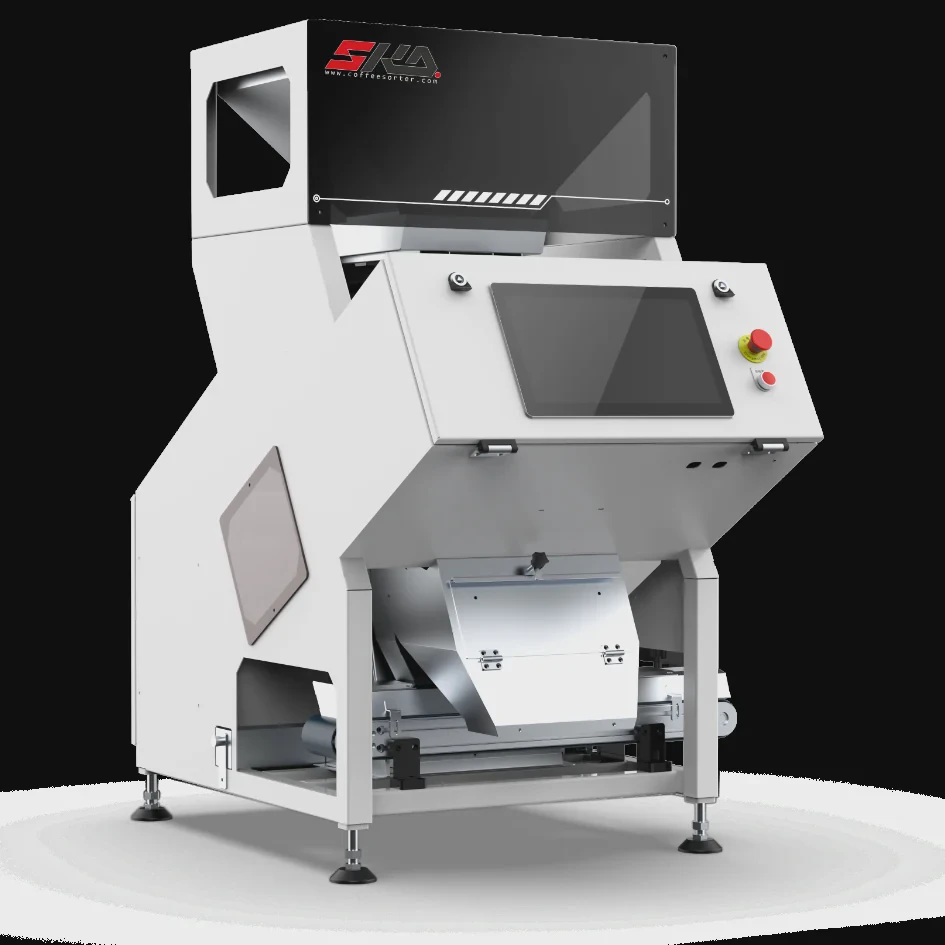
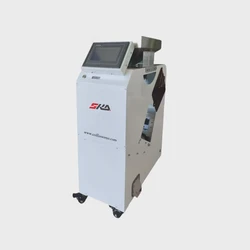
We are not on the list above, and we would look silly pretending to be Bühler. SKA Machinery builds coffee equipment only: color sorters from 30 kg/h up to 2.5 t/h, plus hullers and roasters for the stages around sorting. Machines are fabricated at our Anhui plant under an ISO 9001 system, ship CE certified, and export and after-sales run from Ningbo.
Where we fit: roasteries, cooperatives, washing stations and small to mid-size export mills that want factory-direct pricing, a machine configured for coffee rather than adapted from rice, and an engineer on WhatsApp when something goes wrong. Where we do not: plants sorting above roughly 2.5 t/h, and buyers who need a global field-service network in every coffee country. We will tell you that on the first call rather than quote you the wrong machine.
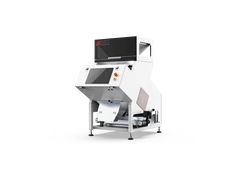
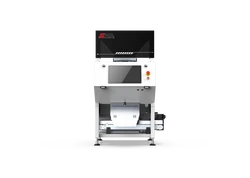
See the K128C at the top of our range, the SKA-16 at the bottom, or read small vs industrial sorters if you are still deciding on a class.
FAQ
Who is the largest color sorter manufacturer?
By installed base and product range, Bühler, Satake and TOMRA are the largest Western names. Largest is not the same as best fit, and plenty of coffee processors run perfectly well on a smaller specialist machine.
Are Chinese color sorters good enough for export coffee?
Yes for surface defect removal, provided the machine is configured and tested on your material. The gap that remains with European machines usually shows up in sensor options for internal defects, not in whether black beans come out.
Should I buy from a local dealer or direct from the factory?
Direct works when the factory ships to your country regularly and answers technical questions itself. A dealer earns their margin when you need a part on site within a day and the factory cannot do that.
How do I compare quotes that look nothing alike?
Normalize them: rated capacity on your material, accuracy figure with the test condition stated, what the compressor and electrical work cost, warranty length in writing, and whether training is included. Our price guide breaks those lines down.
Next steps
Shortlist two or three names from this page, send each of them the same sample and the same quality target, then compare written test reports. If your volume lands between 30 kg/h and 2.5 t/h, put us on that shortlist and we will run your material and send the numbers back, including the ones that argue against buying from us. Request a quote or message us on WhatsApp.