How to Remove Foreign Matter from Coffee: Stones, Sticks and Glass
Foreign matter in coffee is not one problem. A stone, a stick, a piece of glass and a husk may all arrive in the same lot, but they do not behave the same way in a processing line. The safest way to remove them is to separate the jobs: prevent contamination upstream, remove heavy and oversized material mechanically, then use optical sorting for the pieces that remain visually different from the coffee beans.
This guide explains where each stage fits, what a coffee color sorter can and cannot remove, and how to verify the result before the lot moves to export packing. It is written for coffee processors, dry mills, roasters and exporters planning a cleaning or sorting upgrade.
What counts as foreign matter in coffee?
Foreign matter is any material that is not part of the coffee lot and should not reach the finished product. It includes material introduced during harvesting, drying, transport, storage or handling.
- Mineral matter: stones, sand, soil clumps and small pieces of concrete.
- Plant matter: sticks, leaves, stems, parchment, dried cherry fragments and weeds.
- Packaging and handling debris: string, plastic, paper, wood splinters and pieces of pallet.
- Glass and metal: fragments from bottles, lights, tools or damaged equipment.
- Defective coffee beans: black, sour, mould-damaged, insect-damaged or badly discoloured beans. These are not foreign matter in the strict sense, but they are usually handled by the same quality-control system.
That distinction matters. A stone is an external object. A black bean is coffee, but it is still a defect. The inspection method and acceptance limit should be recorded separately for each category.
How to remove foreign matter from coffee
The most reliable coffee cleaning line uses more than one barrier. A practical sequence is:
- Inspect the intake area and remove visible debris before it enters the conveying system.
- Screen and aspirate to separate oversized, undersized and light material.
- Use density or gravity separation where heavy stones or dense mineral particles are a known problem.
- Use magnets and metal detection where the risk assessment identifies ferrous or metal contamination.
- Use a coffee color sorter to eject visually different stones, sticks, glass fragments, husk pieces and defective beans that remain in the product stream.
- Check the reject stream and finished lot using a documented sampling method before release.
No single machine should be described as a universal foreign-matter solution. The right line depends on the material size, moisture, density, contamination type, target throughput and the specification your buyer applies.
What each cleaning stage is designed to do
Intake inspection and good housekeeping
Start before the machine. Keep loading floors, hoppers, conveyors and storage areas clean. Inspect bags, pallets, tools and lighting above open product. A broken bulb, loose bolt or piece of plastic is easier to control before it reaches the line than after it has been mixed through a full lot.
Screening and sieving
Screens separate by size. They can remove oversized sticks, large stones, clumps and material that is much smaller than the coffee. They do not reliably remove a stone or glass fragment that is close to the bean size, and they do not judge colour or surface condition.
Air aspiration
An aspiration channel uses an air stream to lift lighter material away from heavier coffee. It is useful for husk, chaff, leaves and light plant debris. Air settings need care: too little air leaves light contamination in the product, while too much air can carry good coffee into the reject stream.
Gravity and density separation
Density equipment is useful when the problem is a heavy stone, soil ball or dense foreign object. Density alone is not a complete answer, because some defective beans and some foreign materials can overlap in weight. Use it as one barrier, not as proof that every visible contaminant has been removed.
Magnets and metal detection
Magnets can capture suitable ferrous particles. A metal detector is a separate control and should be specified according to the product flow, sensitivity target and installation point. Neither method removes glass, stones, wood or colour defects.
Where a coffee color sorter fits
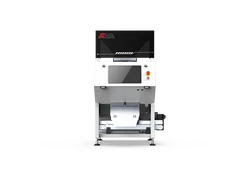
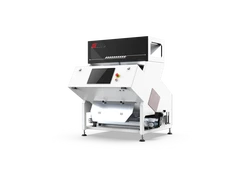
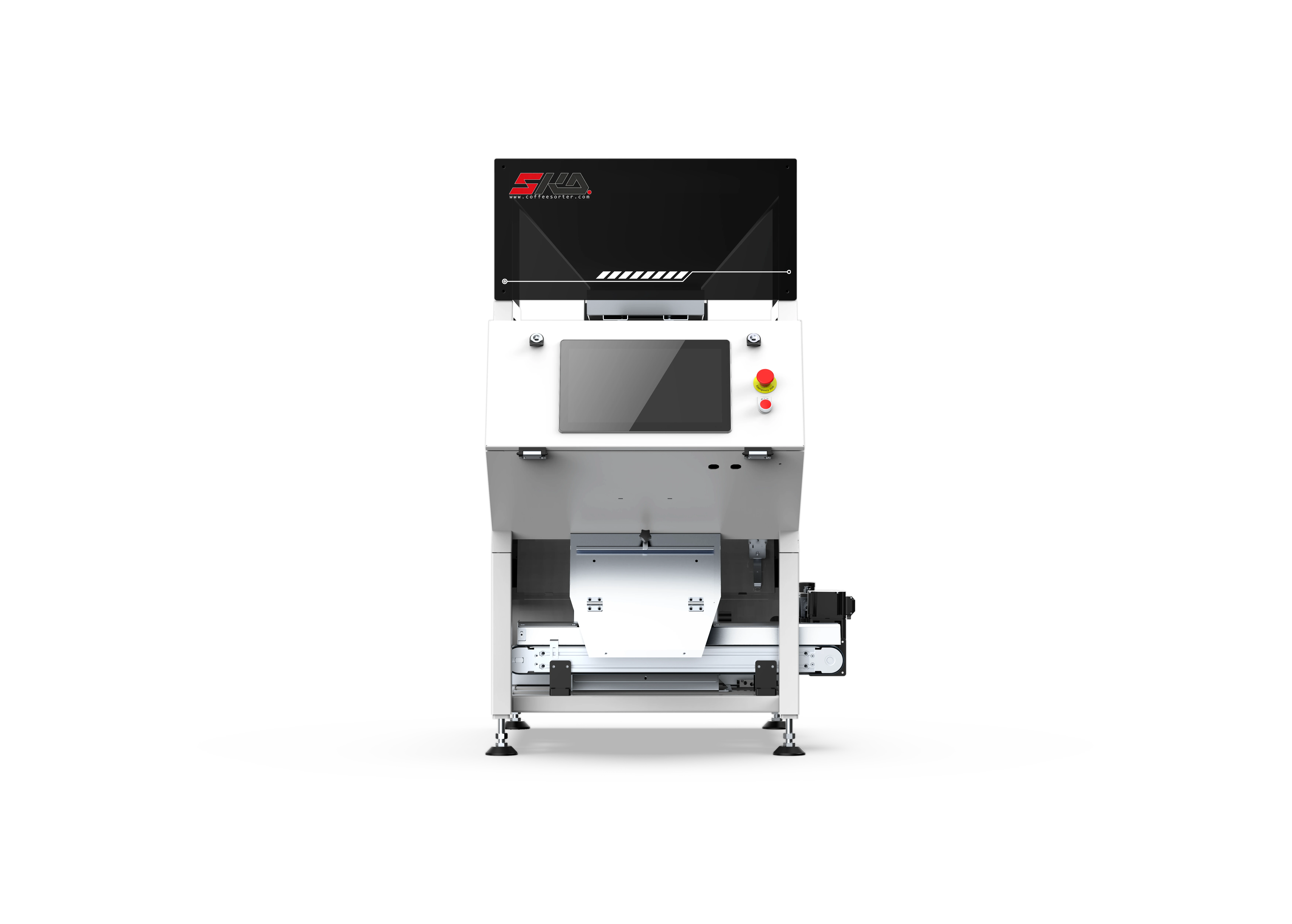
A coffee color sorter is an optical inspection and ejection machine. Coffee moves through a controlled viewing area, cameras and lighting inspect each passing piece, and compressed-air valves eject material that falls outside the selected acceptance profile.
In a coffee line, optical sorting can help remove:
- Stones and soil particles that contrast with the coffee.
- Sticks, husk, shell fragments and plant material with a different colour or shape.
- Glass or plastic pieces that are visible to the camera and differ from the product.
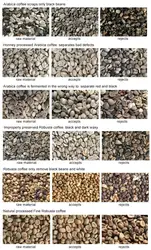
- Black, sour, mould-damaged, insect-damaged or badly discoloured coffee beans.
The result depends on contrast, size, orientation, surface condition, lighting, feed presentation and machine settings. A transparent glass fragment that looks like the background, or a brown stick that closely matches the coffee, is harder to separate than a bright stone on a clean viewing background.
What optical sorting cannot guarantee
Optical sorting is not an X-ray system and it does not analyse every chemical or internal condition inside a bean. It may not identify internal mould, hidden fermentation damage, same-colour foreign matter or a contaminant hidden behind another piece in the product flow.
It also does not replace food-safety controls, metal detection where required, sanitation, pest control or a documented hazard-analysis plan. A supplier should explain the machine's scope instead of promising that one sorter eliminates every contamination risk.
How to test foreign-matter removal before buying
Use your own material. A clean demonstration sample is not a useful acceptance test.
- Send a representative sample. Include the stones, sticks, husk, glass-like fragments and defective beans that actually occur in your line. Do not send only the cleanest lot.
- Describe the target. State your throughput, defect categories, acceptable carry-out and whether the test is single-pass or double-pass.
- Ask for a reject-stream review. You need to see what the machine removes and how much good coffee leaves with it.
- Record the test conditions. Keep the material description, moisture if available, feed rate, air pressure, sensitivity setting, pass count and sample size.
- Repeat the check after installation. Use the same sampling method so that the factory test and production result can be compared.
Our coffee defect-rate testing guide explains detection rate, carry-out and throughput in more detail. Those three numbers should be read together. A high detection figure with excessive good-product loss is not a complete result.
How to choose the right removal point
| Problem | Useful first barrier | What to verify |
|---|---|---|
| Large stones or clumps | Screening and density separation | Size range, density overlap and reject capacity |
| Husk, leaves and light plant matter | Air aspiration | Air setting, good-coffee carry-out and dust control |
| Metal fragments | Magnet or metal detector | Material type, sensitivity and installation position |
| Sticks, glass or plastic with visible contrast | Optical sorting | Detection on your sample and reject-stream loss |
| Black, sour or mould-damaged beans | Optical sorting plus quality inspection | Defect definition, sample method and target specification |
| Hidden internal damage | Lot quality control and laboratory or cup evaluation | What the sensor can actually measure |
Building a practical control plan
Write down where each risk is controlled. For example, screens may handle oversize debris, aspiration may handle light husk, a magnet may handle ferrous particles, and optical sorting may handle visible stones, sticks, glass and defective beans. Then define who checks each point, how often the reject stream is inspected and what happens when a result is outside the limit.
Keep the accepted product and reject product traceable during testing. If a customer later questions a shipment, records of the sample, settings and inspection results are more useful than a brochure claim.
How SKA approaches optical removal
SKA coffee color sorters are built for coffee processors that need a final optical quality gate after upstream cleaning. The range covers 30 kg/h to 2.5 t/h across the listed configurations, with sample testing used to confirm the achievable result on the buyer's own material.
We do not print one unconditional accuracy figure for every coffee lot. Send representative beans and describe the foreign matter you need to remove. We can test the material, show the reject stream, discuss carry-out and tell you where a color sorter fits in the wider cleaning line.
See the coffee color sorter range, compare the CCD and NIR options, or contact SKA for a sample test.