Coffee Sorting Machine for Brazil Processing Plants
A coffee sorting machine for Brazil processing plants has to handle large, mixed lots of Arabica and Conilon while meeting the screen size and defect limits written into an export contract. The machine choice follows the specification, not the other way round.
This guide covers what Brazilian export lots ask of a sorting line, where optical sorting sits after drying, how to size the machine, and what to put in a purchase order before shipment.
What a Brazilian export lot specifies
Green coffee from Brazil is graded by screen size, defect count and cup classification. Screen size, called peneira locally, is expressed in sixty fourths of an inch, and screen 17/18 is a common export grade for Arabica lots.
The COB classification groups lots by defect count, with Type 2 through Type 6 often used in trade descriptions. Cup terms such as Strictly Soft, Soft, Hard and Rioy describe the cup, not the physical cleaning result. Treat all of these as contract terms: the buyer specification you sign is the one that matters.
Natural and pulped natural processing are common in Brazil. Lots can vary in colour, surface condition and size spread even within one origin, so one machine setting rarely covers a whole season. Read more in our screen size versus optical sorting guide.
Arabica and Conilon do not sort the same way
Minas Gerais, Sao Paulo and Bahia are associated with Arabica, while Espirito Santo is the main Conilon, or Robusta, region. The beans differ in size, shape, density and colour, and the defects that show up differ with the harvest and drying method.
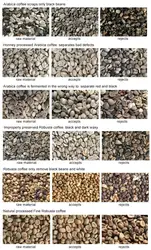
Test each material group separately. A setting tuned on a clean Arabica lot may carry too much good product into the reject stream when it meets a Conilon lot with a different surface colour. Ask for a test on the fractions you actually ship.
Where optical sorting sits after drying
A dry mill line usually follows this order:
- Hulling and cleaning to produce green coffee.
- Screen grading to build the size fractions the contract names.
- Density separation where stones and heavy mineral matter are a known risk.
- Optical sorting on each fraction that has an appearance or defect limit.
- Sampling and inspection of accepted product and reject stream.
- Bagging, commonly 60 kg jute bags, and container stuffing for export.
Grading before sorting makes the feed more even and lets the sorter be set for the defects in that fraction.
| Stage | Job | What to verify |
|---|---|---|
| Screen grading | Build size fractions | Slot size, fraction yield, contract match |
| Density separation | Remove heavy mineral matter | Reject capacity and stone content |
| Optical sorting | Remove colour, shape and surface defects | Detection, carry out and throughput on your sample |
| Sampling | Release the lot | Sample method and documented result |
Sizing the machine for Brazilian volumes
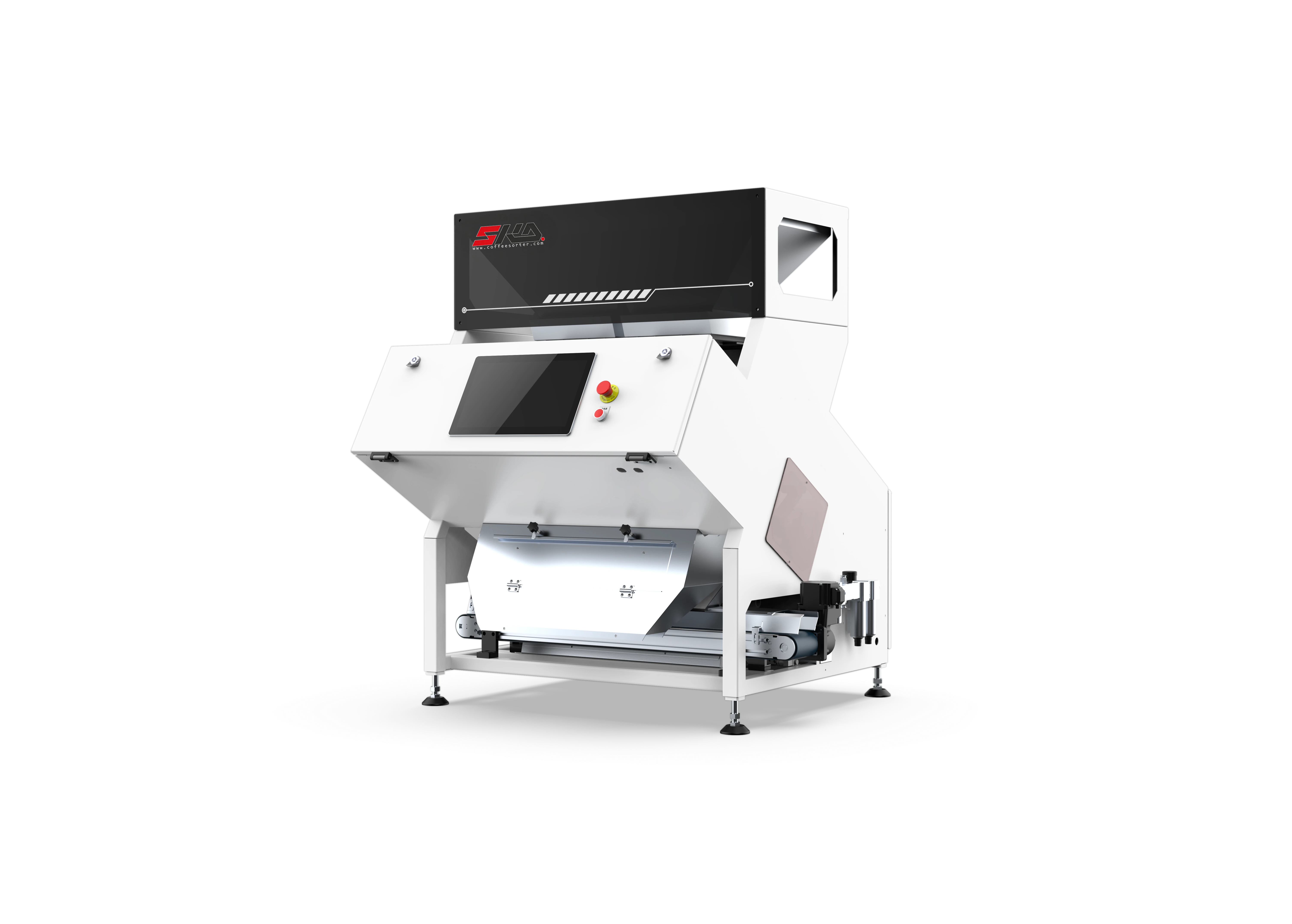
SKA coffee color sorters cover 30 kg per hour to 2.5 tons per hour across the listed configurations. For a plant that runs seasonal peaks, size for the peak shift and the number of fractions sorted separately rather than the annual average.
Also plan for re sorting a reject stream, extra passes on difficult lots, and floor space around the machine for feed and collection. The capacity guide shows how to work from lot volume back to a machine size.
Sample testing before the order
Use your own beans, split by screen fraction and by species. A clean demonstration sample will not predict a season with mixed defect levels.
- Send representative material including black, sour, insect damaged and broken beans, plus the stones or sticks that actually appear in the line.
- State the target: throughput, defect categories, acceptable carry out, and whether the test is single pass or double pass.
- Inspect the reject stream and see how much good coffee leaves with it.
- Record the conditions: feed rate, air pressure, sensitivity setting, pass count and sample size.
- Repeat the check after installation so the factory test and production result can be compared.
Our defect rate testing guide explains how detection, carry out and throughput should be read together. Our foreign matter guide covers the stages that sit upstream of the sorter.
Support terms for an overseas plant
Our published after sales terms are: a 12 month warranty on the complete machine with the start date confirmed in writing at order; remote installation guidance and operator training, with an on site engineer visit agreed and quoted separately before the order; spare parts shipped with the machine plus a spare parts price list; WhatsApp service contact with a 24 hour response; and post warranty maintenance discussed with the sales manager.
We do not claim a local service office or a parts warehouse in Brazil. If on site work is required, agree the scope and cost before shipment. Our warranty guide lists the questions to put to any supplier.
What to write into the purchase order
- Screen fractions and species to be sorted.
- Defect categories and the acceptance limit for each.
- Throughput at a stated feed rate and pass count.
- Maximum acceptable carry out of good coffee into the reject stream.
- Acceptance method, sample size and the records to be supplied with the test.
- Warranty start date, spare parts list and training scope.
- Whether an on site visit is included or separately quoted.
For EU bound shipments, buyers may also ask for traceability documentation around the lot. That is a paperwork requirement to agree with the buyer, not a function of the sorter.
Working with SKA on a coffee sorting machine for Brazil
SKA builds coffee processing equipment, with manufacturing in Anhui and sales, export and after sales support from Ningbo. CE certification and ISO 9001 manufacturing are part of the documented background we share with buyers. We supply the optical sorting stage and state clearly where it fits in the wider line.
Send representative beans, tell us the screen fractions and defect categories in your contract, and we can test the material, show the reject stream and discuss carry out before you decide.
See the coffee color sorter range, read the buying guide, or contact SKA for a sample test.